ROYAL RECORD
What rulers proclaimed
Inscriptions situate royal authority, divine patronage and ideals in a dated historical context.
Explore royal declarations, clay archives, Aramaic documents and the lives of communities across the Achaemenid Empire. Distinguish recorded events, stated ideals and historical interpretation.
Inscriptions situate royal authority, divine patronage and ideals in a dated historical context.
Archives document commodities, labor, language and economic relationships.
Petitions and contracts illuminate local communities and their interactions with imperial structures.
These records establish contact and historical context. They do not independently establish religious conversion, the identity of the Johannine Father or direct transmission of any particular doctrine.
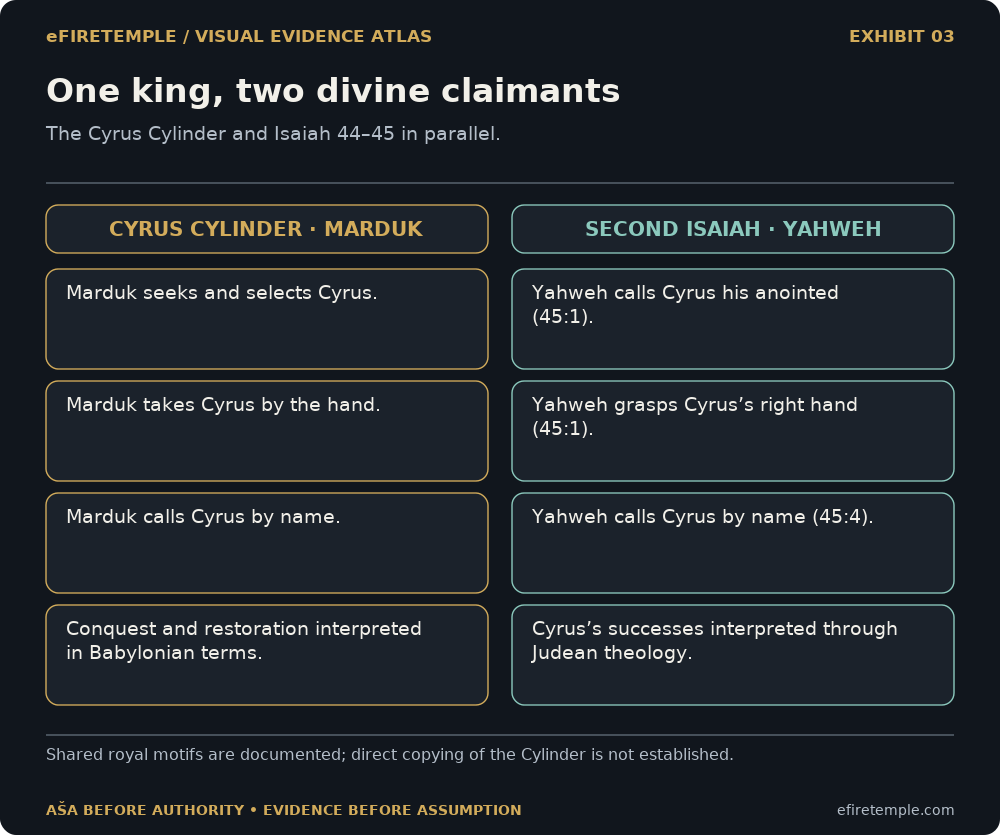
The Cyrus Cylinder and Isaiah 44–45 in parallel.
Trace references ↗
Babylon · 539 BCE
Trace references ↗
Cambyses II · 525 BCE
Trace references ↗
Āl-Yāhūdu and surrounding communities · 572–477 BCE (published group)
Trace references ↗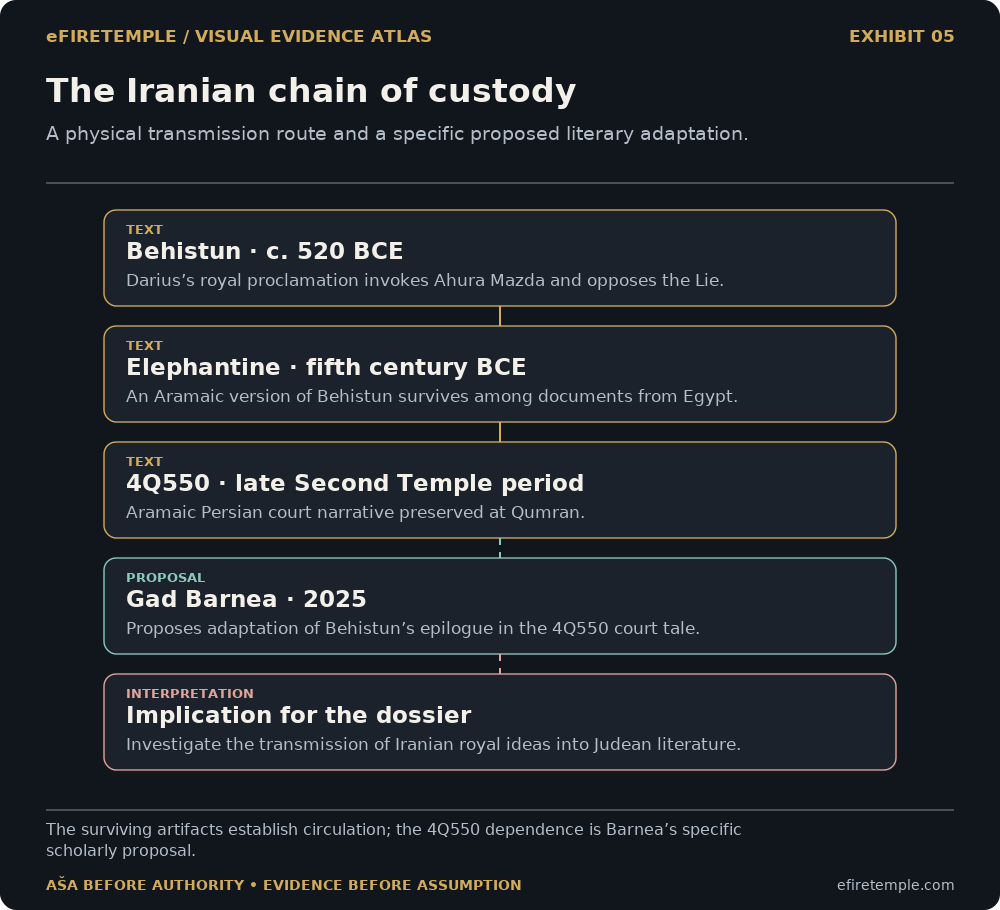
A physical transmission route and a specific proposed literary adaptation.
Trace references ↗
Darius I · Naqš-e Rostam · DNa
Trace references ↗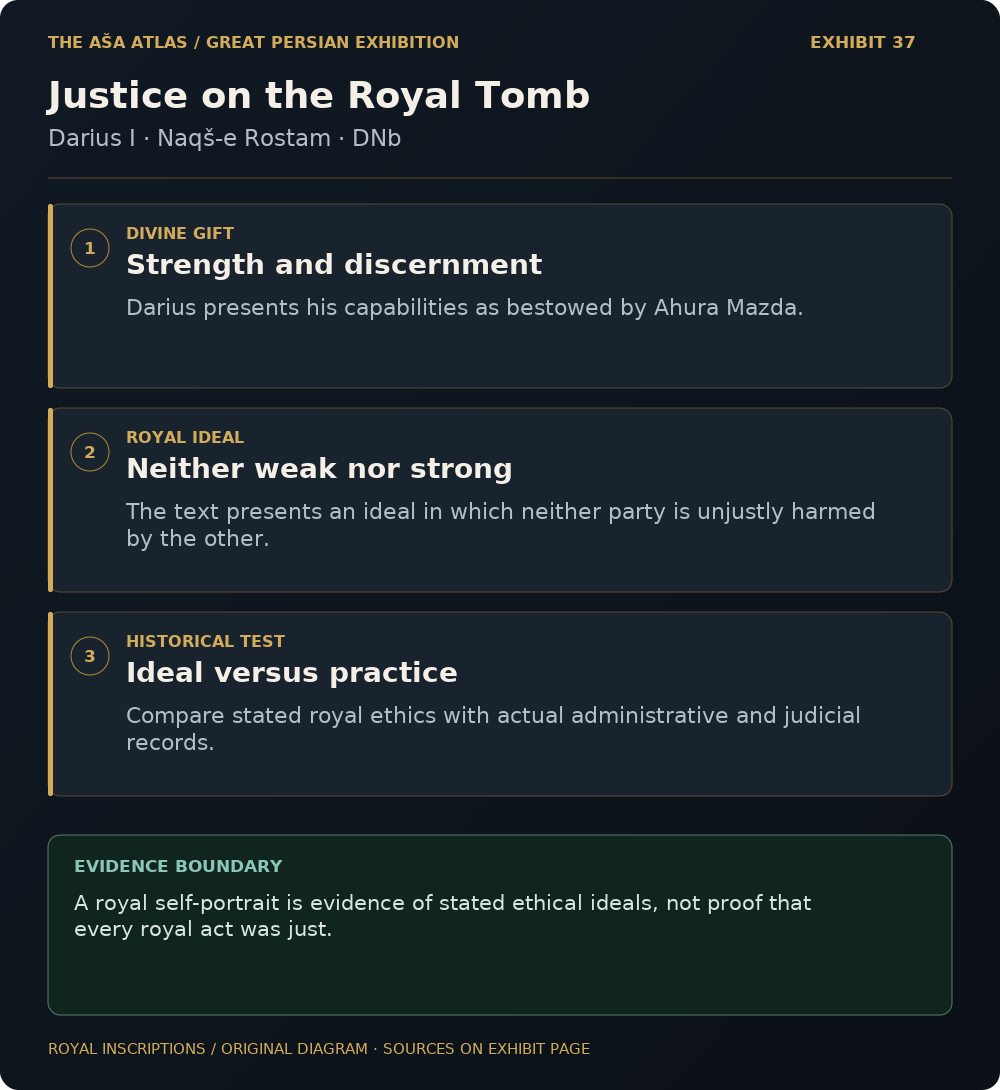
Darius I · Naqš-e Rostam · DNb
Trace references ↗
Susa · Darius’s DSf foundation inscription
Trace references ↗
XPh · fifth-century BCE royal testimony
Trace references ↗
Persepolis Fortification Archive · 509–493 BCE
Trace references ↗
Persepolis Treasury Archive · 492–457 BCE
Trace references ↗
Murašû Archive · Nippur · 454–404 BCE
Trace references ↗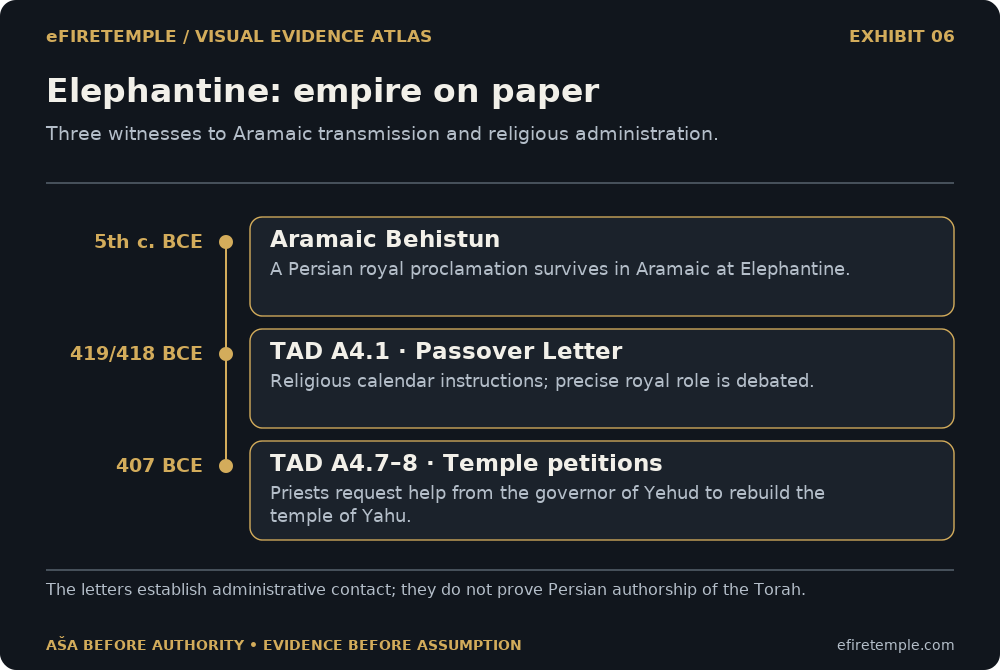
Three witnesses to Aramaic transmission and religious administration.
Trace references ↗
Elephantine temple petition · 407 BCE
Trace references ↗
Sardis · Susa · Achaemenid communications
Trace references ↗
Bactria · Fourth-century BCE documents
Trace references ↗