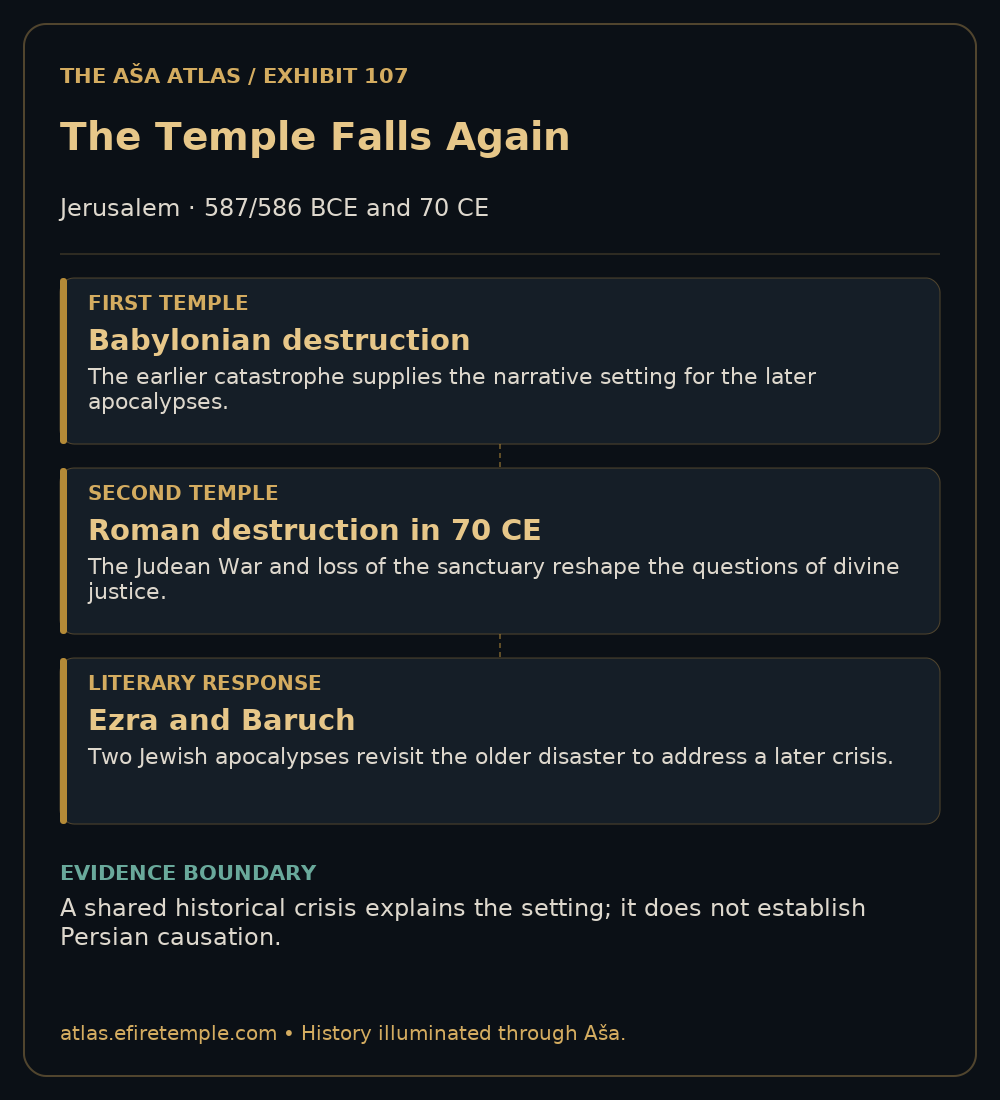
The Temple Falls Again ↗
Jerusalem · 587/586 BCE and 70 CE
A shared historical crisis explains the setting; it does not establish Persian causation.
Trace references ↗Explore 4 Ezra, 2 Baruch, Daniel reception and resurrection after the Roman destruction of Jerusalem.
These later or overlapping texts illuminate a Jewish apocalyptic context. They do not establish direct dependence or an Iranian origin.
4 Ezra 12:11–12 names Daniel’s fourth kingdom: a positive control for explicit literary reception. 2 Baruch 49–51 explores embodied resurrection and transformation. John 5 and 11 offer a contemporary or earlier comparison, not a demonstrated literary link.
Open the comparative study ↗Jerusalem · 587/586 BCE and 70 CE
A shared historical crisis explains the setting; it does not establish Persian causation.
Trace references ↗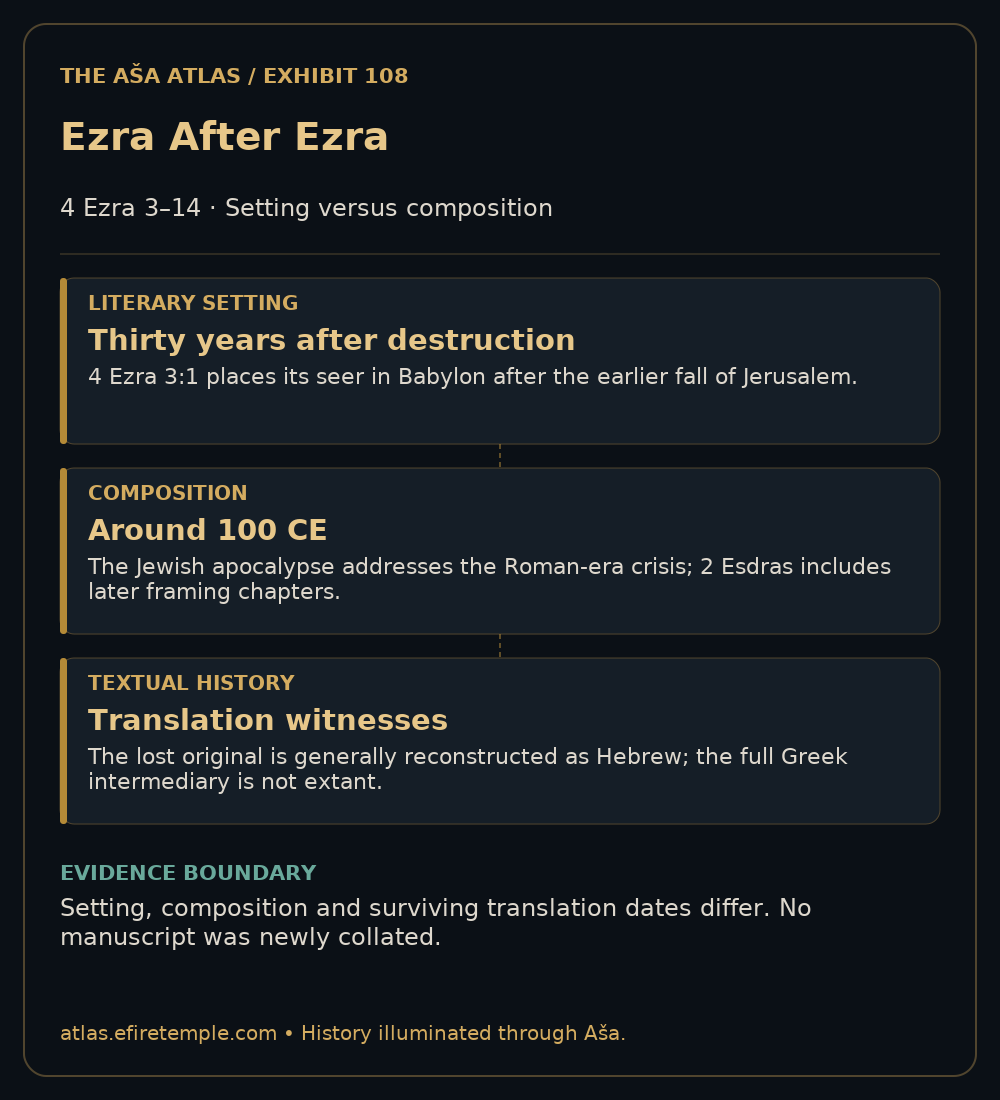
4 Ezra 3–14 · Setting versus composition
Setting, composition and surviving translation dates differ. No manuscript was newly collated.
Trace references ↗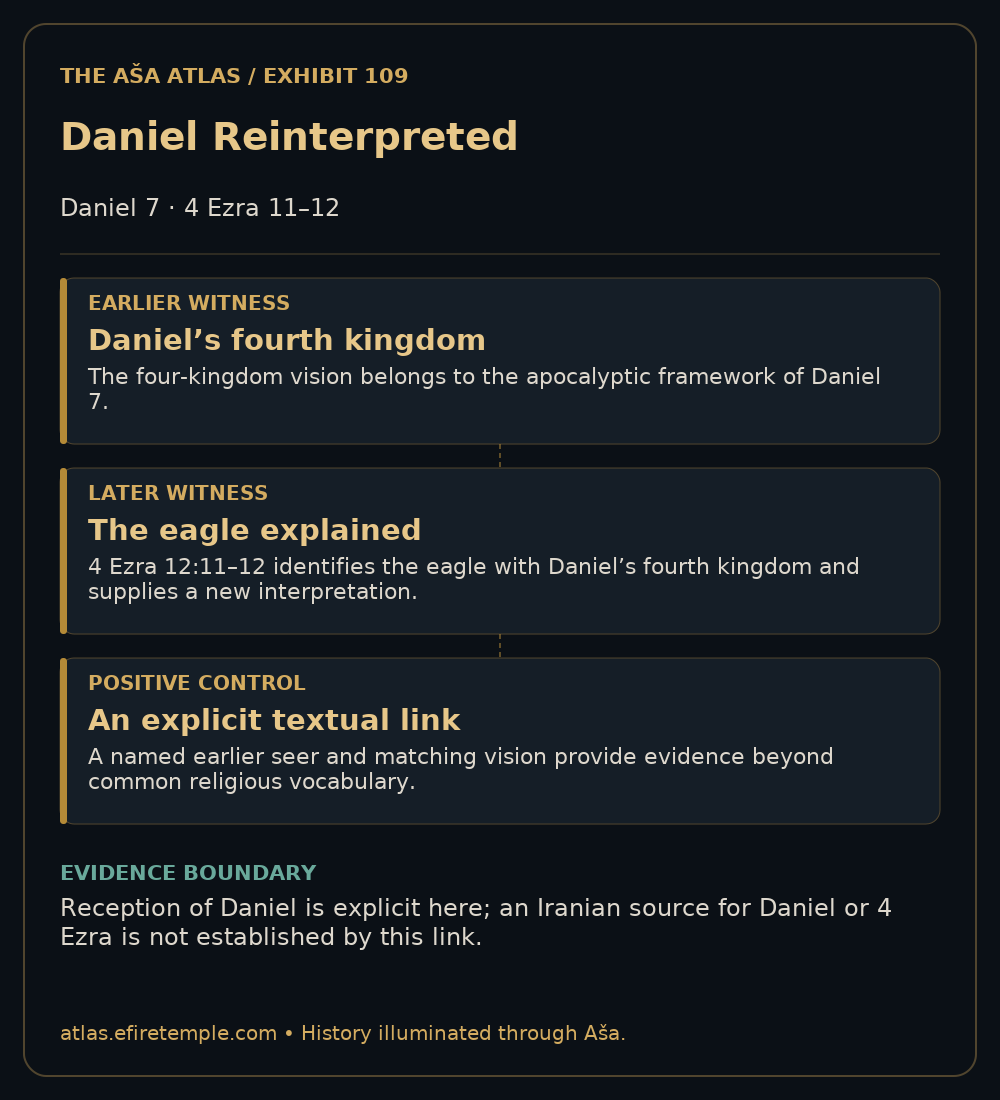
Daniel 7 · 4 Ezra 11–12
Reception of Daniel is explicit here; an Iranian source for Daniel or 4 Ezra is not established by this link.
Trace references ↗
2 Baruch · Crisis and restoration
The exact relationship to 4 Ezra remains debated. Translation-level review is not original manuscript collation.
Trace references ↗
2 Baruch 49–51 · 4 Ezra 7
Resurrection is shared; the sequence and imagery differ. This is not evidence of a Persian loanword.
Trace references ↗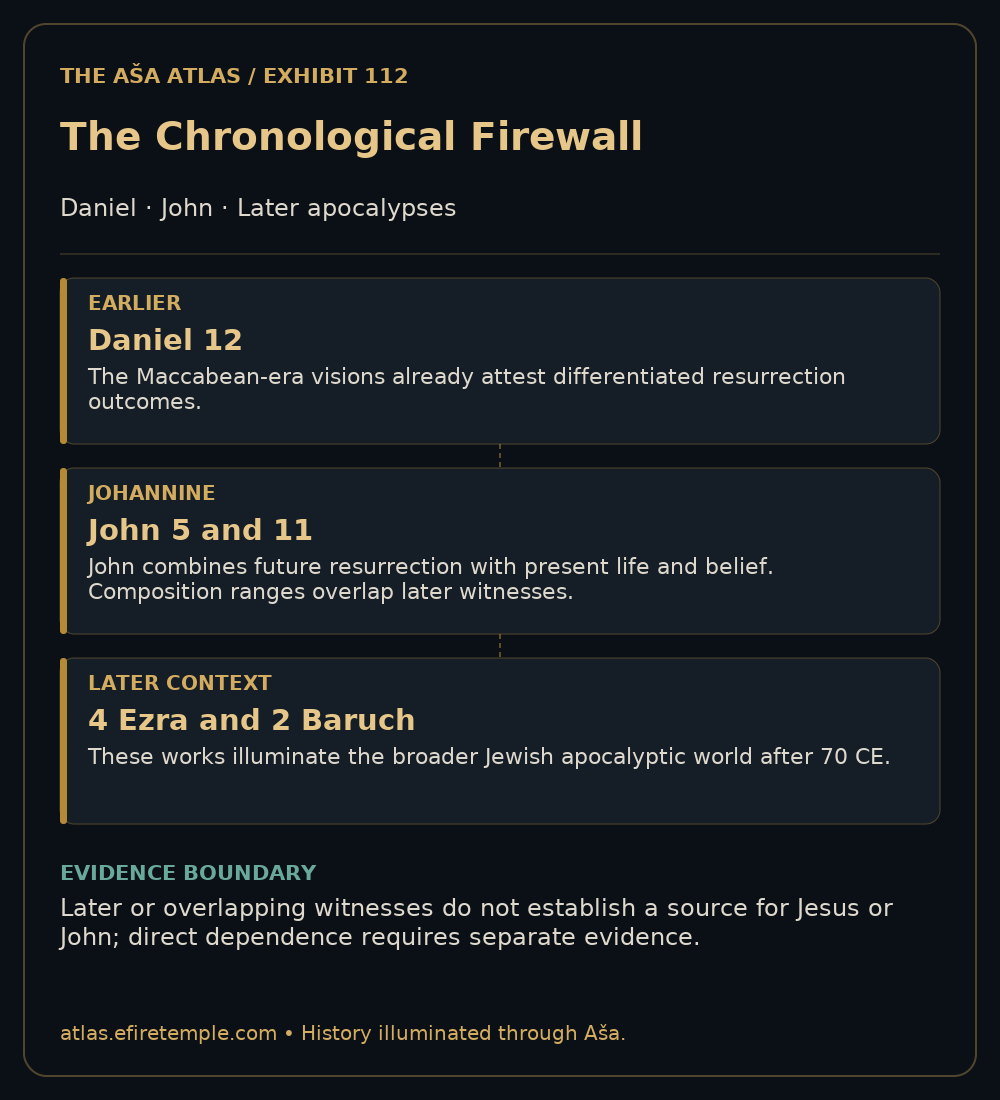
Daniel · John · Later apocalypses
Later or overlapping witnesses do not establish a source for Jesus or John; direct dependence requires separate evidence.
Trace references ↗