New Testament / Textual observation
John 1:12–13
Children of God are born not from blood or human will but from God.
- John 1 — text and notes (USCCB) ↗Passage locator registered; independent edition and claim-support review pending.
Which fatherhood and sonship features are comparable and distinctive?
Children of God are born not from blood or human will but from God.
Physical Abrahamic descent is acknowledged while conduct and reception distinguish spiritual allegiance.
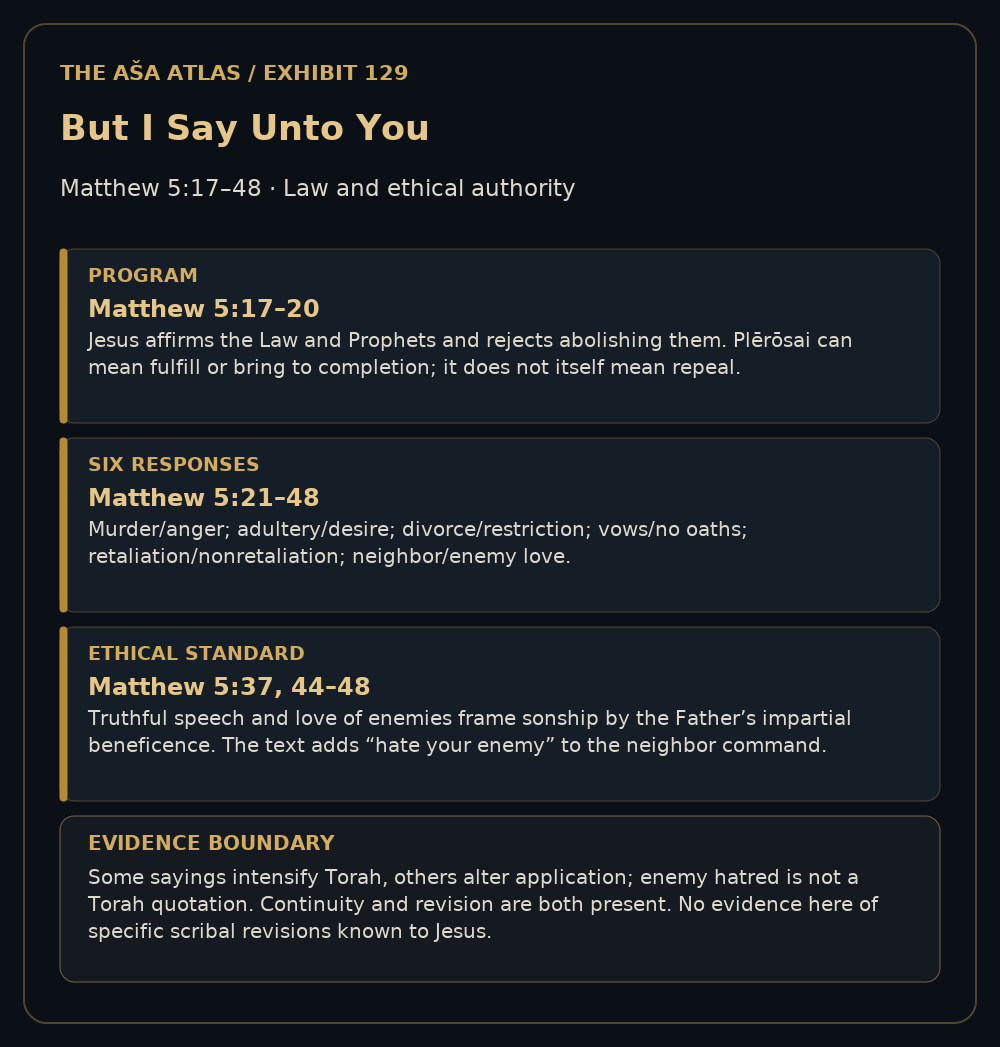
Mercy, purity, peacemaking and love of enemies characterize disciples and divine sonship.
Reliance on descent from Abraham is challenged.
People from east and west share the patriarchal banquet; expected heirs may be excluded.
The Father of lights gives good gifts and brings forth through the word of truth.
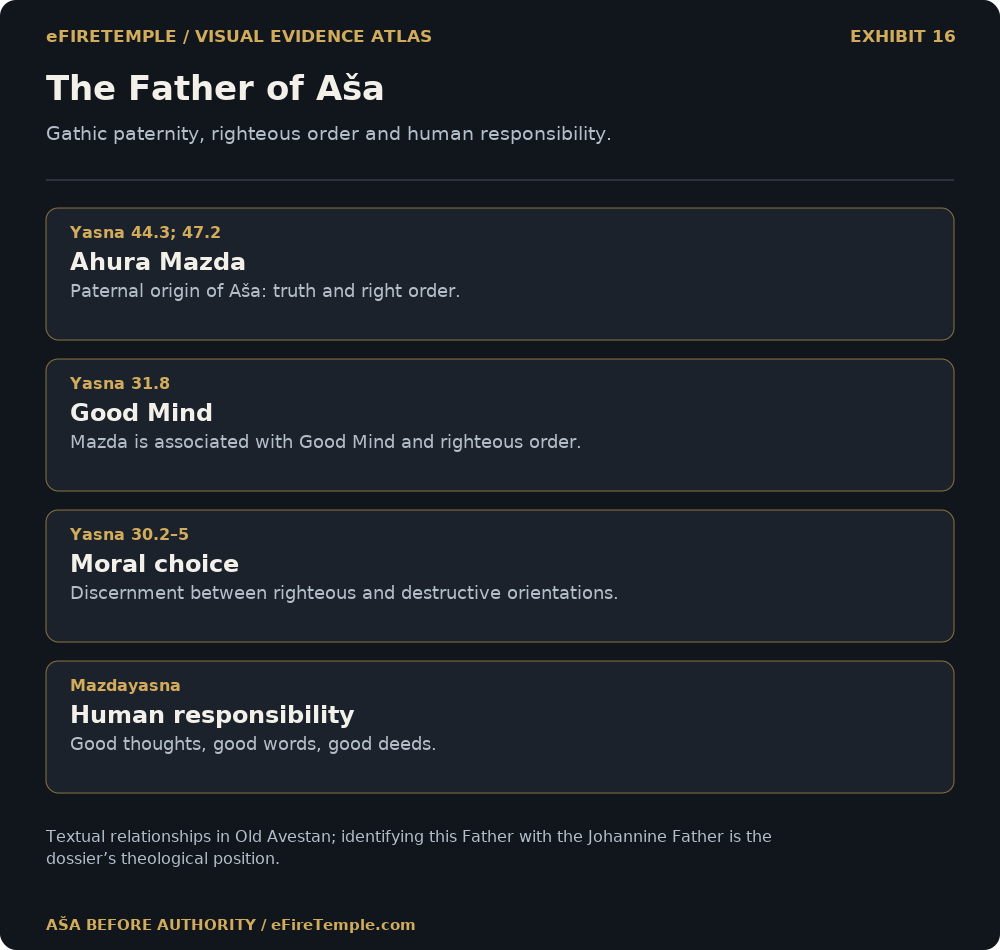
Paternal and good-mind language belongs in the comparative test; verify individual readings and translation differences before claiming exact equivalence.
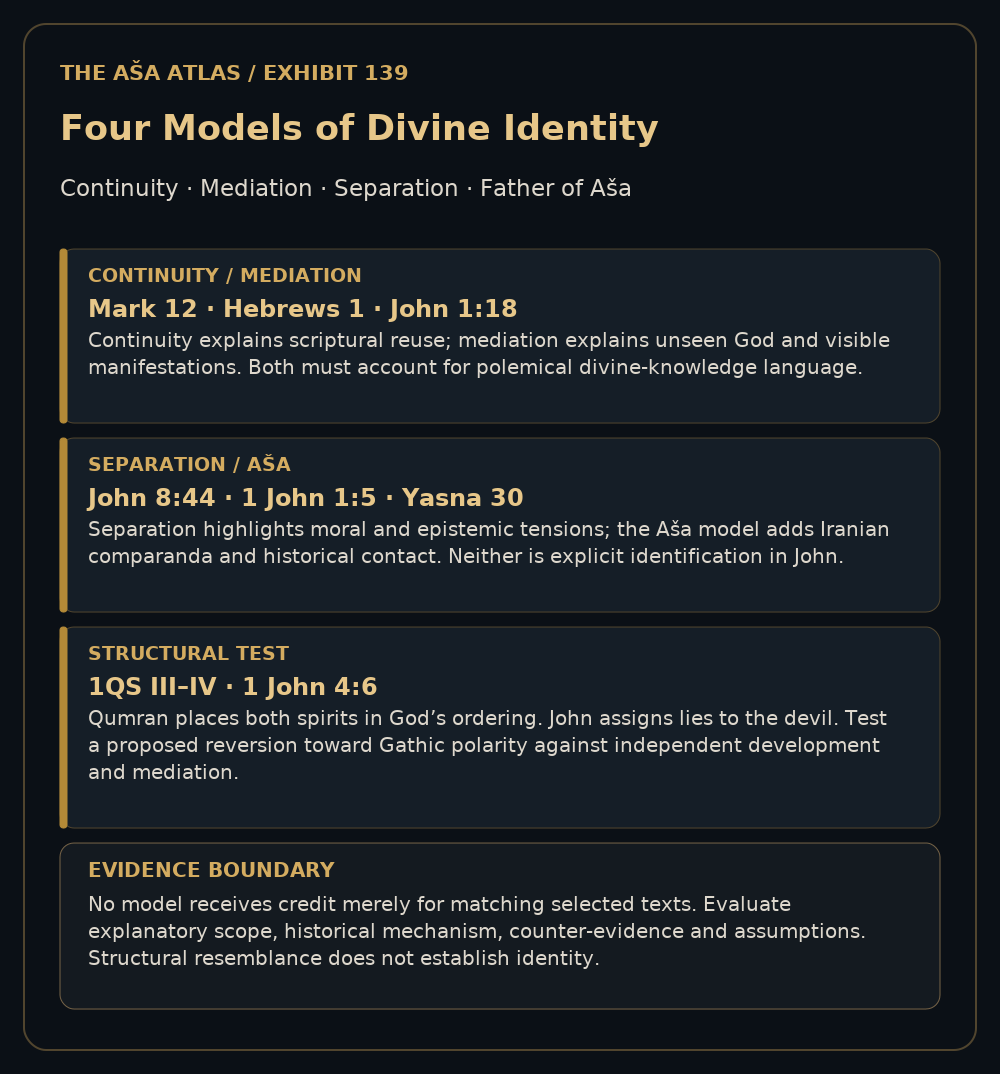
Spiritual kinship is not guaranteed by ancestry; distinct traditions use moral and paternal concepts.
Investigate the specific conjunction of truth, good mind, divine fatherhood and action.
Jewish covenant, wisdom and prophetic ethics also ground moral sonship and universal beneficence.
The Avestan passage assignments require specialist review; no lexical or historical identity is inferred. Ancestry is not a moral criterion.