RUN 08 / THE THEOLOGICAL COMPARISON ENGINE
← Theology research center
Wholeness and Immortality — The Purpose of Salvation
What does salvation transform, and how do the Gathic and Johannine accounts of human destiny compare?
01Yasna 33–34; Haurvatāt and AmeretātIranian
02John 17:3, 17–23Johannine
03John 5:28–29; 6:39–40; 11:25–26Johannine
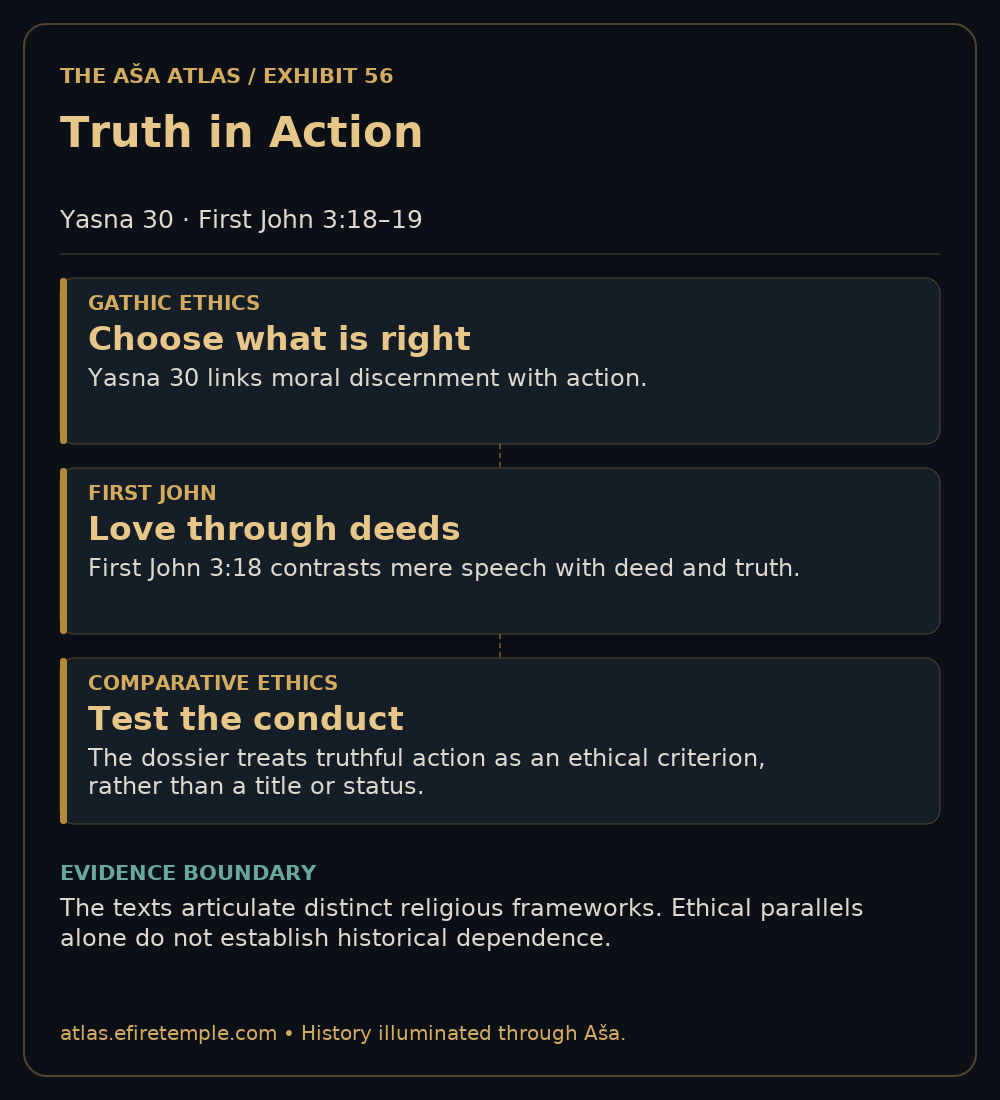
041 John 3:2–3, 18; John 15:4–5Johannine
052 Peter 1:4–7New Testament
Read the witnesses
Iranian / Comparative observation
Yasna 33–34; Haurvatāt and Ameretāt
Wholeness and immortality are divine qualities/powers and aspirations for righteous humans; the Gathic relationship includes worship and gift exchange.
Johannine / Textual observation
John 17:3, 17–23
Eternal life involves knowledge of God and the one sent; the prayer links sanctification in truth with unity and love.
Johannine / Textual observation
John 5:28–29; 6:39–40; 11:25–26
Resurrection and life are also expressed through the Son’s agency, faith and judgment; human ethical transformation is not the only mechanism.
Johannine / Textual observation
1 John 3:2–3, 18; John 15:4–5
Hope of likeness, purification, love in deeds and dependence on the vine frame transformation as relational.
New Testament / Textual observation
2 Peter 1:4–7
Participation and virtue provide another Christian witness; the relationship to the Johannine corpus requires separate historical testing.
Evaluate the argument
OBSERVATION
Salvation can include transformation, unity, life and divine gifts beyond a merely juridical acquittal; the compared systems differ in mediation and ontology.
EFIRETEMPLE INTERPRETATION
The proposed Aša synthesis compares wholeness and immortality with purification, unity and eternal life.
ALTERNATIVE READING
Christian salvation also includes faith, grace, resurrection, forgiveness and the distinctive role of Christ. Jewish and Greek alternatives remain live.
EVIDENCE BOUNDARY
These are structural analogies, not exact equivalences, an obligatory sequence of stages, or proof of Mazda as the Father. The historical and theological claims remain separate.
Visual and linguistic evidence
Original-language anchors
Avestan / PASSAGE
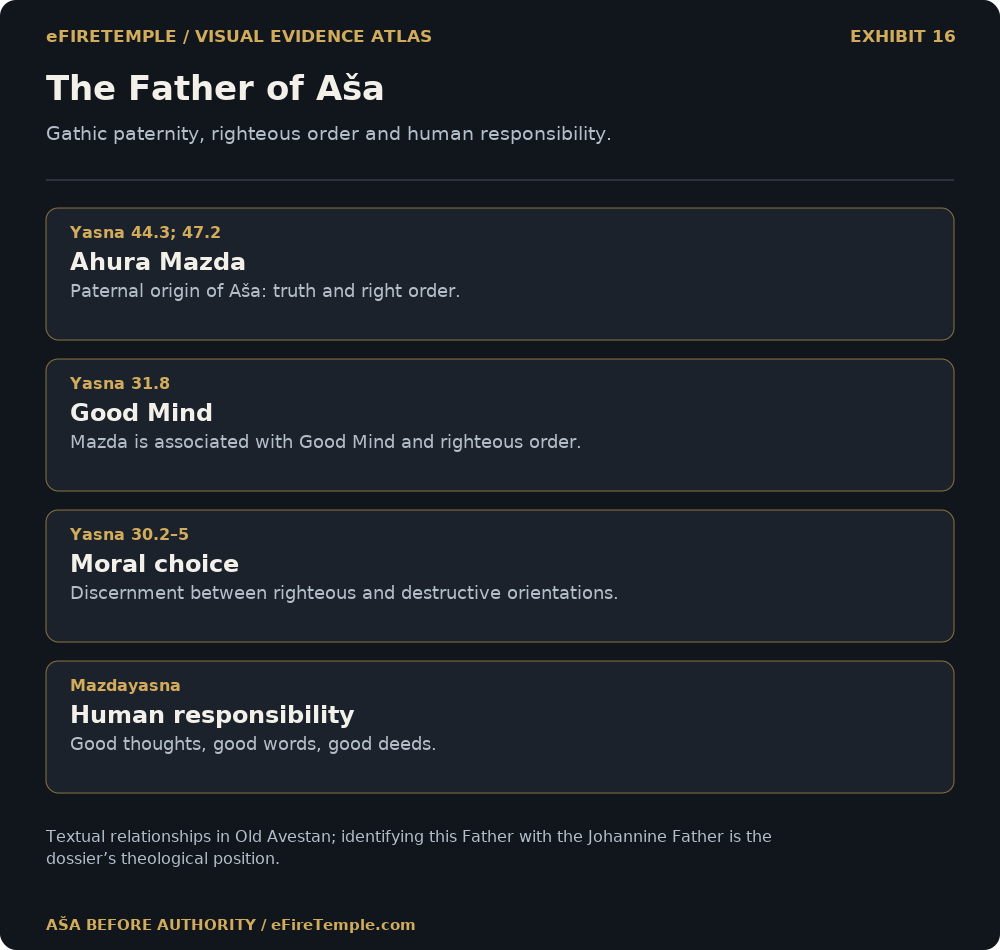
Yasna 44.3 / 47.2
aṣ̌a- · ptā
aša · ptā
Truth / right order; father
Selected lexical anchors, not a continuous quotation or a reconstruction of the Avestan verse. Hintze discusses both paternal passages.
Open record ↗Greek / PASSAGE
John 17:17
ὁ λόγος ὁ σὸς ἀλήθειά ἐστιν
ho logos ho sos alētheia estin
Your word is truth
Predication in the prayer to the Father.
Open record ↗Language study: Divine participation — wholeness, immortality and truth ↗